11 December 2024
BioCliVE-Nutrient partitioning
Stoichiometry-based nutrient partitioning reveals the mechanisms behind biodiversity overyielding
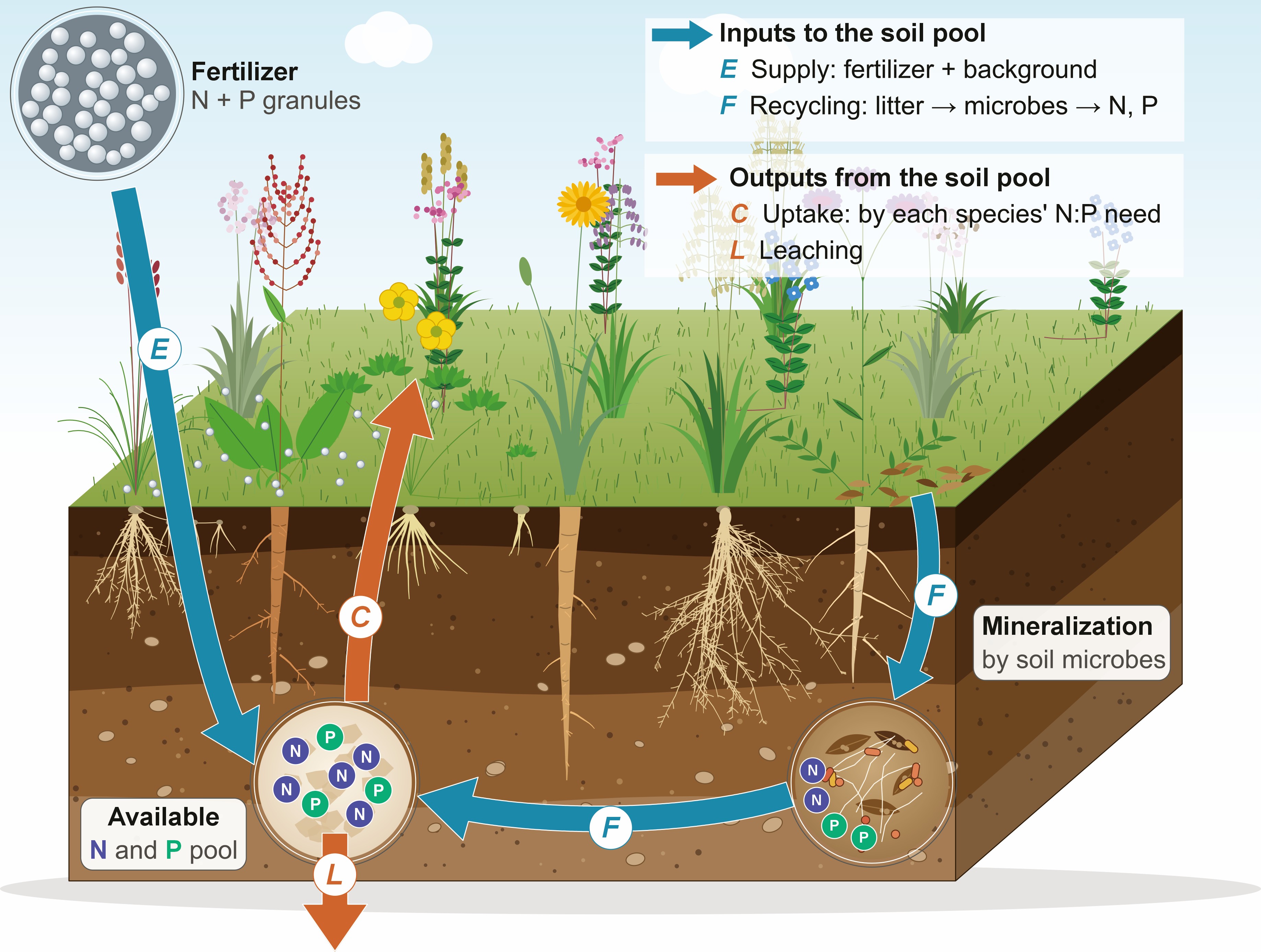
Species-rich plant communities often produce more biomass than monocultures, and resource partitioning is widely invoked to explain this, but how much it contributes is rarely quantified. We developed a stoichiometry-based model of plant–soil nutrient cycling and derived its equilibrium yield. The mismatch between species’ nutrient requirements and nutrient supply decomposes into two community indices: the stoichiometric mismatch (the distance between the community’s mean requirement and supply) and the stoichiometric diversity (the variance in requirements among species). Stoichiometric mismatch reflects which species dominate, and stoichiometric diversity how different the coexisting species are, linking them to the selection and complementarity components of the net biodiversity effect (overyielding).